Public history exercise / University of Leicester

It wasn't the rockets. It was the paperwork.

On 20 July 1969, Neil Armstrong stepped onto the Moon. Engineers built the machines, but administrators built the system that made sure the machines worked.

Explore the story

Four chapters. One quiet revolution.

This site turns dissertation research into a public history experience about Apollo's least cinematic breakthrough: the administrative machinery that made the Moon landing possible.

The three principal centers barely talked to each other, and Apollo was never going to get there unless the organization changed.

George Mueller, NASA Associate Administrator for Manned Space Flight

Chapter One

Why Apollo Nearly Failed Before It Began

The hardest Apollo problem was not only thrust, guidance, or orbital mechanics. It was getting three powerful NASA centers and a contractor ecosystem to behave like one program.

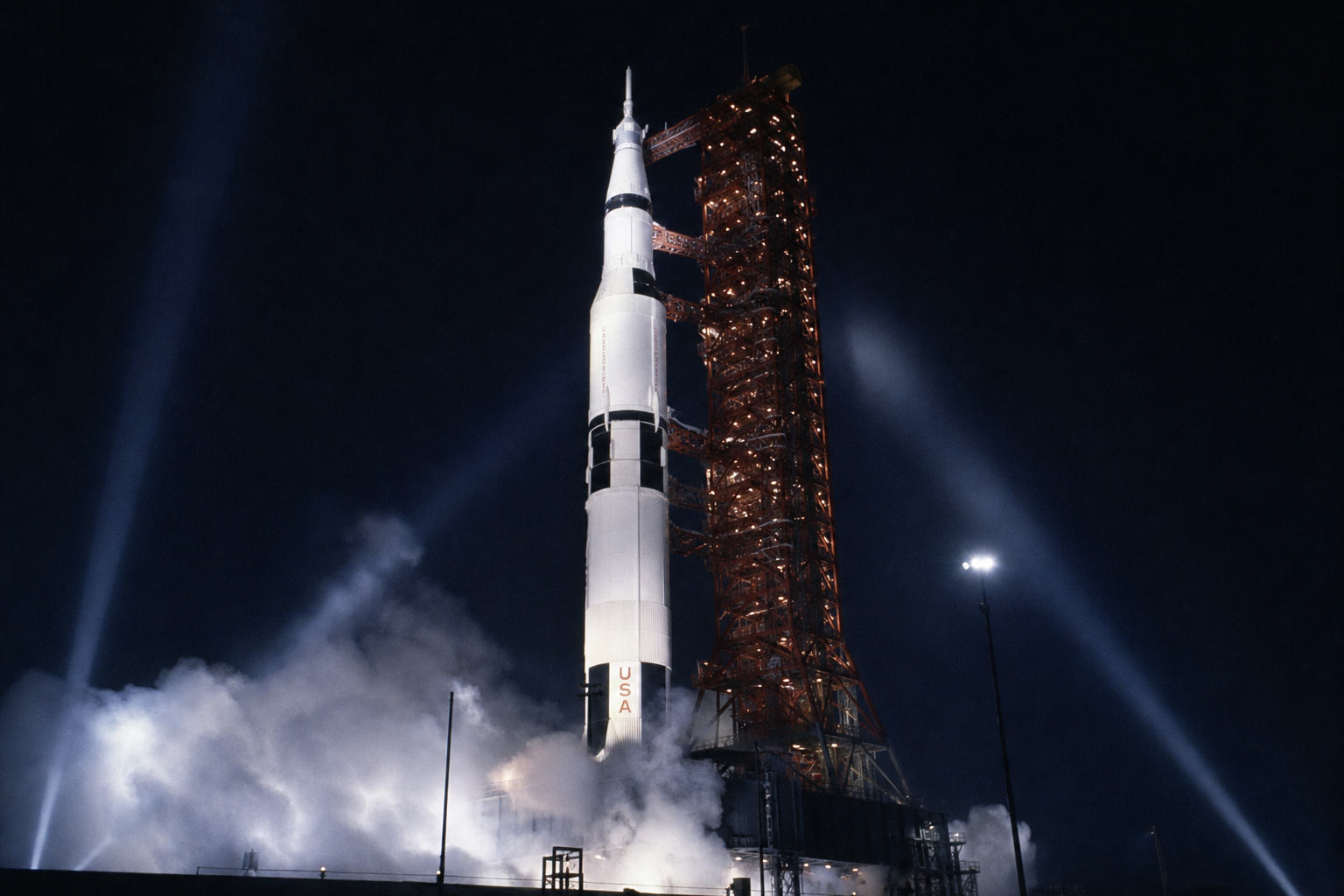
Marshall Space Flight Center built the Saturn rocket under Wernher von Braun. The Manned Spacecraft Center in Houston controlled the command and lunar spacecraft. Launch Operations at the Cape handled the final integration and launch campaign.

Each center had its own procedures, loyalties, and political power. Interface issues were often solved by personal relationships rather than a durable system, which meant knowledge could disappear when individual engineers moved on.
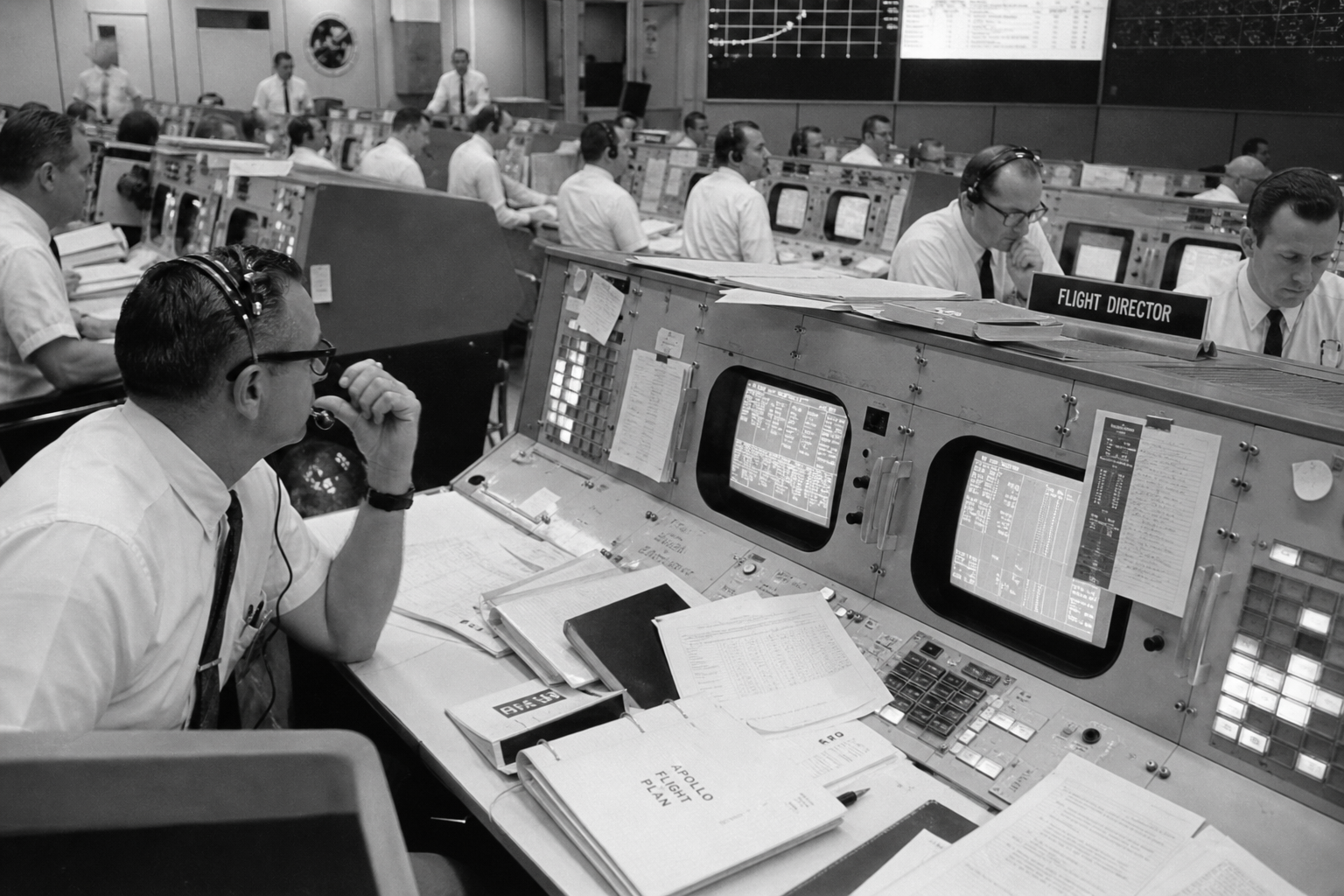
Archival-style NASA operations room with engineers, managers, consoles, and technical documents
NASA's hidden work was coordination, documentation, and proof.

Kennedy's Commitment

The United States committed to a lunar landing with only minutes of human spaceflight experience behind it.

The Fiefdom Years

Centers and contractors operated with weak cross-program accountability and fragile informal interfaces.

Mueller Arrives

George Mueller diagnosed the organizational problem and began redesigning Apollo's management structure.
Chapter Two

Four Ideas That Changed Everything

Apollo's administrative breakthrough was a stack of mutually reinforcing systems. None looked heroic. Together, they made the heroic possible.

The GEM Box - A New Chain of Command

Mueller created functional lines for systems engineering, testing, reliability, mission operations, and flight crew operations across headquarters, field centers, and contractors. The goal was direct accountability across the whole vehicle.

The Phillips Report - Paperwork With Consequences

Samuel Phillips' 1965 review found uncontrolled design changes and weak quality procedures at the command module contractor. The response was formal configuration management: documented changes, control boards, and verification.

Bellcomm - The Independent Brain

Bellcomm engineers sat near NASA Headquarters and evaluated the whole Apollo system without belonging to any one center. Their job was to catch interface failures before the launchpad did.

All-Up Testing - The Calculated Gamble

Mueller pushed to fly all three Saturn V stages live on the first test. The gamble depended on the new administrative system lowering the odds of unknown defects.

Chapter Three

Did It Actually Work?

Apollo is unusual because the management system left a performance trail in the flight records. The Saturn V trend data shows an engineering organization learning in public.

Saturn V S-II thrust deviation across the first three Saturn V flights
MissionDateCrewDeviation
AS-501 / Apollo 4Nov. 1967Unmanned-1.37%
AS-502 / Apollo 6Apr. 1968Unmanned-0.43%
AS-503 / Apollo 8Dec. 1968Borman, Lovell, Anders+0.04%

Apollo with integration

Independent analysis, configuration control, and repeated verification allowed anomalies to become documented improvements.

N1 without integration

Soviet design bureaus lacked an equivalent cross-system authority, and failures remained invisible until launch.

Chapter Four

From Apollo to Challenger

The bureaucracy of innovation was not self-sustaining. It had to be understood, maintained, and defended against schedule pressure.

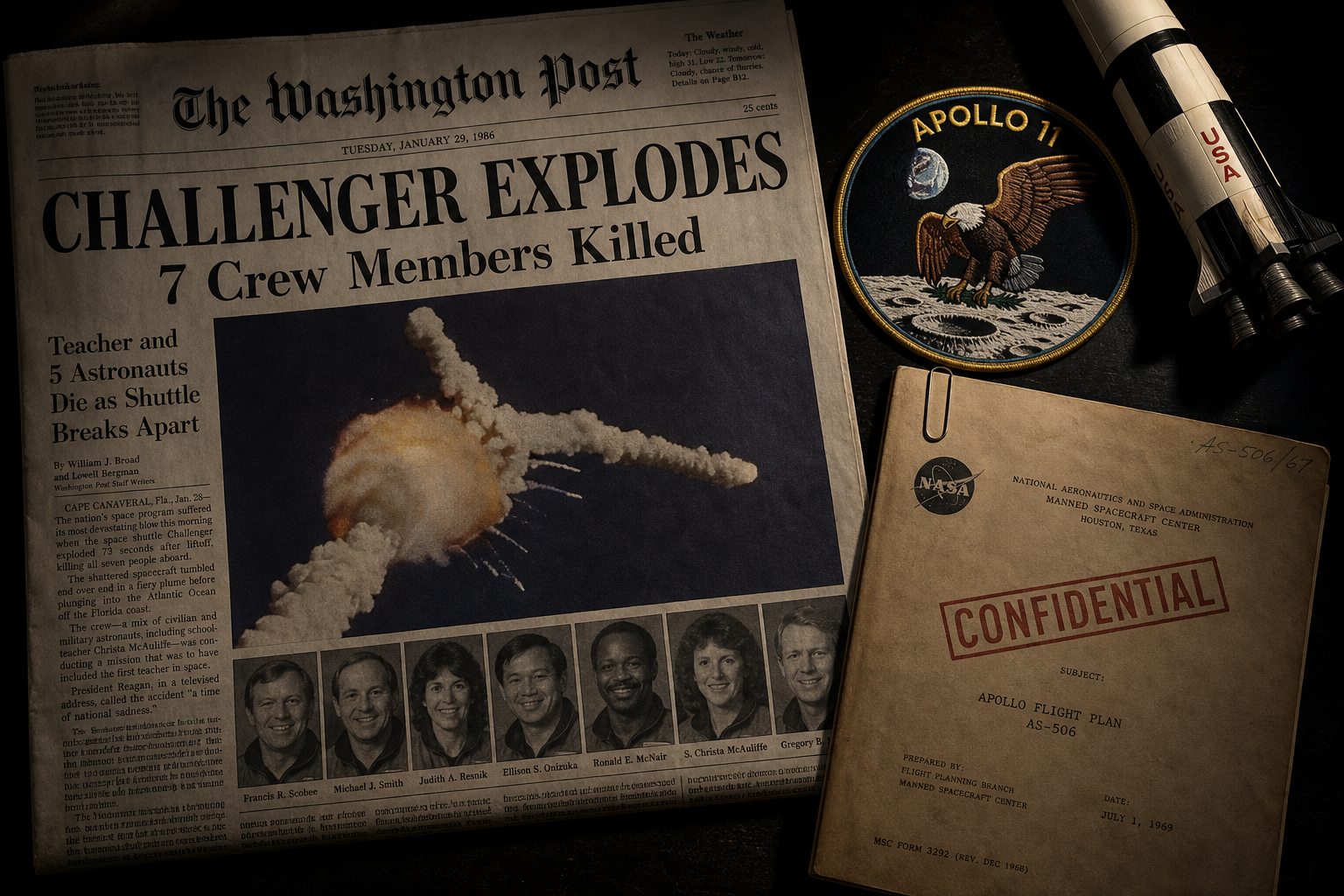
Archival-style composition connecting Apollo success with the Challenger disaster
Success can hide the system that made success possible.

Between Apollo 7 and Apollo 17, the system held: ten successful crewed missions and six lunar landings. But the people who remembered why the procedures existed gradually left, and the culture changed.

Challenger broke apart on 28 January 1986 after warnings about O-ring behavior were not converted into decisive action. The lesson was administrative as much as technical: dissent must move through a system with power.

About the research

The documents behind the story

The site is framed as a public history interpretation of primary source material: oral histories, NASA management reports, technical manuals, flight evaluation data, and accident investigations.